What to see inside the walls
What's free, what's ticketed, and how to spend a day in the Cité without just following the crowd.
In short
The Cité is free to enter. You pay only for the Château Comtal and its ramparts, a visit of one to two hours. Saint-Nazaire is free and shouldn't be missed. The lices, the lane between the two walls, are free and much quieter than the main street. Leave time for the walk down to the Pont Vieux.
Key facts
- The Cité
- Free, open at all hours
- Castle and ramparts
- 19 € or 13 €
- Saint-Nazaire
- Free
- Length of the walls
- Nearly 3 km
Most people arrive at the Narbonne Gate, walk up the main street, and leave wondering what the fuss was about. The Cité rewards a little planning. The best parts are off that main street, and several of them are free.
The Narbonne Gate
This is the main entrance on the eastern side: two tall towers with red conical roofs, built around 1280 under King Philip III. The drawbridge in front of it is Viollet-le-Duc's addition. There wasn't one in the Middle Ages. It's the first small lesson in how much of what you see has been restored, and it's worth keeping that in mind as you walk.
The lices
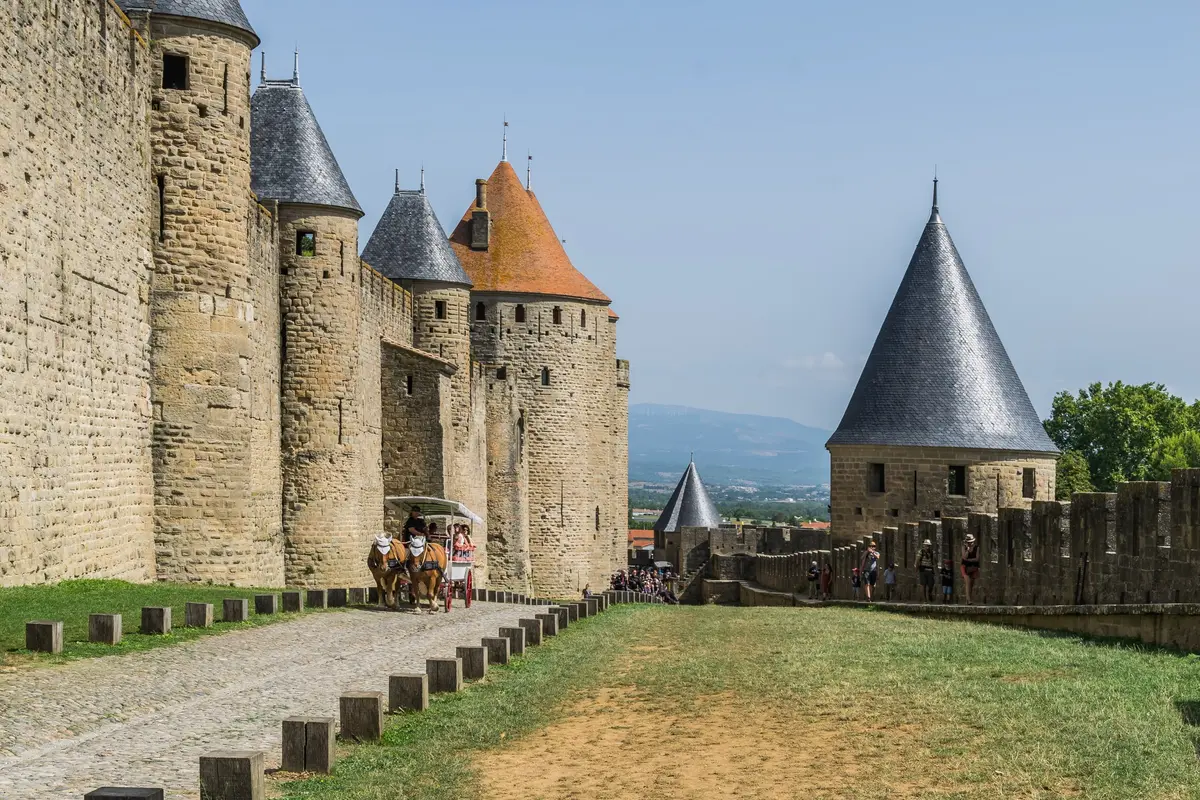
Just inside the gate, before you reach the inner wall, turn left or right. You're now in the lices, the wide strip of grass and cobbles between the two rings of wall. In peacetime it could host tournaments, and in a siege it was a killing ground.
This is the best free thing in Carcassonne. The main street behind you is busy, while the lices are often almost empty. Walk a stretch and you'll have towers on both sides and a clear sense of how the double wall worked. You may see a horse-drawn carriage go past in season.
The main street
Rue Cros-Mayrevieille runs from the gate up to the castle. It's named after the local historian who helped save the Cité, and it's lined with shops selling swords, cassoulet and souvenirs. Expect souvenirs rather than everyday life. The side lanes quickly get quieter, and they're where to look for lunch.
The Château Comtal and the ramparts
This is the one thing you pay for: 19 € from April to September, and 13 € from October to March. Under-18s enter free. The Trencavel family built the castle around 1130 as a residence, then fortified it during the crusade against the Cathars. It's a castle inside a walled city, with its own moat and gatehouse.
Inside, look for two things. The first is the painted room, with its faded medieval knights on horseback under a deep blue vault. The second is the wooden hoardings on the towers, the covered platforms from which defenders dropped things on attackers.
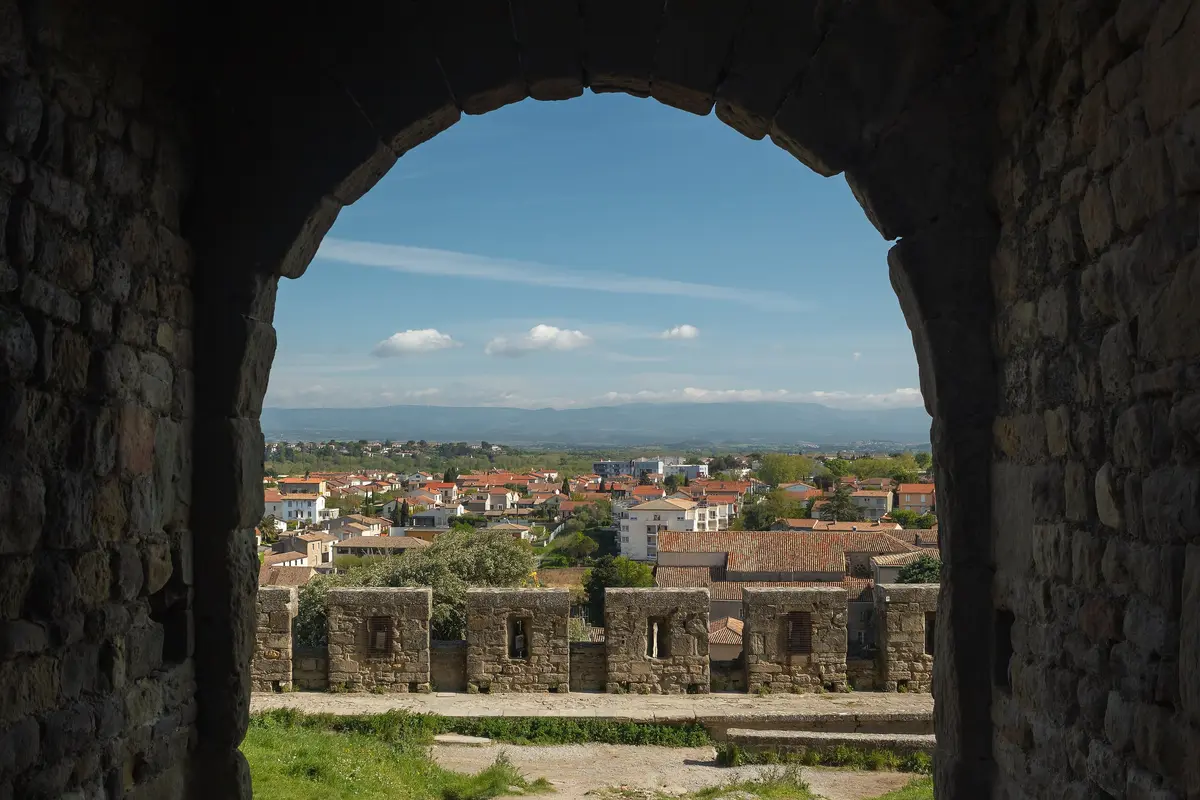
Then go out on to the ramparts. From the chemin de ronde, you see the plain stretching north to the Montagne Noire, with vineyards to the east. From the Bishop's Tower on the western side, the view covers the castle, Saint-Nazaire and the lower town along the Aude, with the Corbières and the Pyrenees beyond. A self-guided visit takes about an hour, but we'd allow more.
Saint-Nazaire
Walk through the Cité to the southern end and you reach the Basilica of Saints Nazarius and Celsus. Entry is free. It's dark and heavy at first, with a Romanesque nave from the middle of the 12th century. Then you reach the choir, rebuilt between 1269 and 1330, and it fills with coloured light. The stained glass dates from the 1280s onwards, and the rose windows are worth a long look.
Look out for the gargoyles on the outside as well. Dogs aren't allowed inside, and on Sundays visiting hours are limited by services.
The Aude Gate
If you leave on the western side, you pass through the Aude Gate and down a cobbled path that runs below the castle. It's steep but very beautiful, especially in the afternoon, and it leads down towards the Pont Vieux. This is the way to go if you're walking back to the station.
Beyond the walls
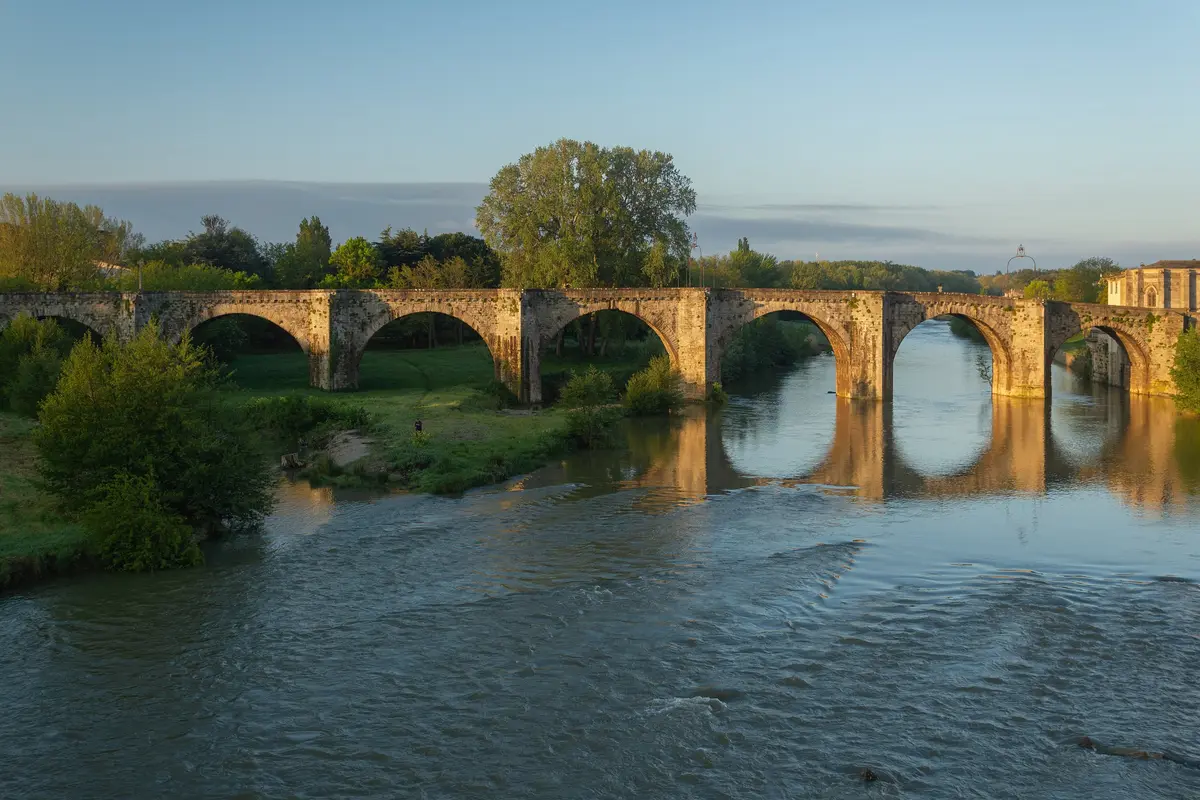
Don't stop at the Cité. The Pont Vieux, the medieval bridge over the Aude, gives you the classic view back. Beyond it, the Bastide Saint-Louis is a grid-plan town founded in the 13th century under Louis IX, and it's where Carcassonne's real everyday life goes on, with cafés around Place Carnot and a covered market. Further on, the Canal du Midi, another UNESCO site, passes by the station with its tall plane trees.
How long do you need?
Three to four hours covers the castle, the basilica and a walk through the lices. A full day leaves time for a long lunch and the lower town.
Before you go
- Enter through the Narbonne Gate and leave by the Aude Gate, if you can.
- Visit the castle early, before the lanes fill up.
- Look up at the wooden hoardings on the castle towers.
- Check when Saint-Nazaire is open on Sundays, as services take priority.
- Walk at least one stretch of the lices.
Prefer it all arranged?
Carcassonne from Toulouse: train, castle and audio tour
More guides

Getting to Carcassonne from Toulouse by train
Which train to take, how long it takes, and the best way from the station up to the walled city.
Last reviewed on 6 November 2026
The best time to visit Carcassonne
Heat, crowds, castle prices and evening light: what each season brings to the walled city.
Last reviewed on 6 November 2026
Carcassonne with kids
Free entry, a game book, a children's audio guide, and how to get through the day without anyone melting down on the ramparts.
Last reviewed on 6 November 2026